
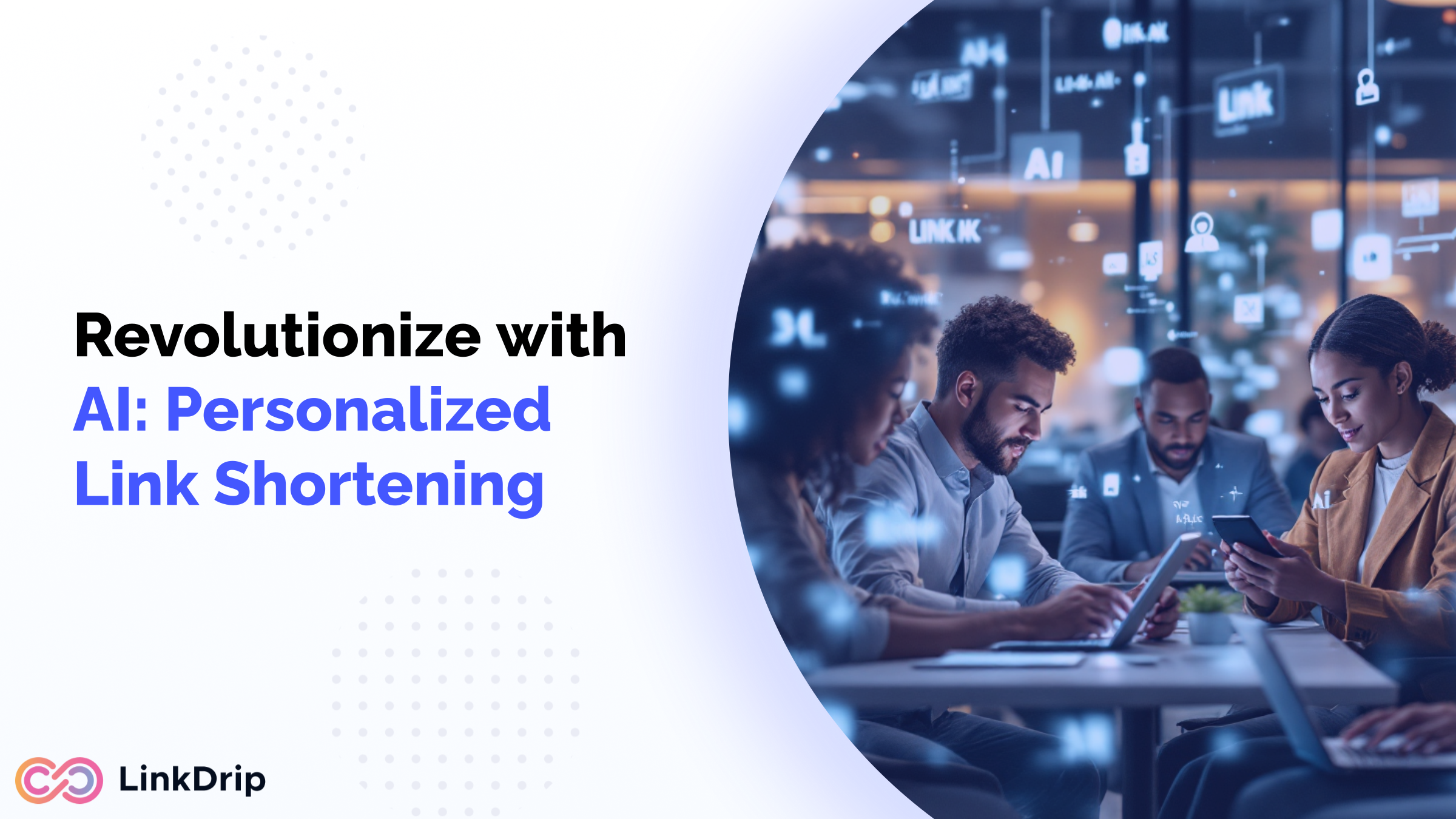
AI-Powered Link Shortening: Personalizing User Experiences

By Charles Fields
In today’s fast-paced digital landscape, marketers and businesses are constantly seeking innovative ways to capture and retain user attention. The integration of artificial intelligence into link shortening services is paving a new path toward hyper-personalization. By tailoring content based on user behavior and predictive analytics, AI is not only simplifying URL management but also enhancing user experiences and boosting engagement. Let's dive into the multifaceted world of AI-powered link shortening and explore how it is reshaping digital marketing strategies.
Introduction to AI in Link Shortening
Artificial intelligence is rapidly transforming the digital marketing ecosystem, and one of its most exciting applications is in the realm of link shortening services. Traditional link shorteners simply compress long URLs into manageable links, but AI-powered versions bring an added layer of intelligence to the process.
With the integration of machine learning algorithms, these tools can analyze vast amounts of user data and historical trends to create personalized, contextually relevant shortened URLs. This means that the simple act of clicking on a shortened link can be tailored to the user’s preferences, location, device type, and even the time of day. By making link personalization smarter and more dynamic, businesses are better positioned to capture user interest and drive higher engagement rates.
Understanding User Behavior: The Basis for Personalization
At the heart of personalization lies user behavior analysis. By understanding how users interact with content, when they are most active, and which devices they frequently use, AI can craft link experiences that resonate on a deeper level. Key aspects include:
- Click-Through Patterns: Analyzing which links generate more traffic allows marketers to identify the most effective content.
- Demographic Insights: Age, location, and interests are crucial in tailoring link outcomes that better suit different audience segments.
- Historical Data Trends: Over time, users create a digital fingerprint that can be used to predict future behavior. AI leverages this data to suggest the optimal link configuration for various scenarios.
This deep dive into user behavior enables a shift from generic link shortening to a dynamic, data-driven approach that speaks directly to individual users. By reducing guesswork and relying on predictive analytics, businesses can significantly improve their marketing ROI.
How AI Analyzes Data for Contextual Link Creation
AI’s strength lies in its ability to process and analyze vast datasets quickly. In the context of link shortening, this means:
- Predictive Analytics: Machine learning models sift through historical engagement data to forecast which URL variations will work best for specific audience segments, reducing reliance on trial and error. For example, platforms such as LinkDrip incorporate AI-driven analytics that empower marketers to optimize their campaigns.
- Real-Time Data Processing: AI systems continuously evaluate incoming data to ensure that link redirections remain relevant to changing user contexts. As user behavior shifts throughout the day, the AI can swiftly adjust the content destination, ensuring that users always land on pages that match their current needs.
- Contextual Relevance: By factoring in elements like geographic location, device type, and browsing history, AI generates links that offer meaningful, context-aware experiences. This not only boosts user satisfaction but also elevates overall campaign performance.
The result is a sophisticated networking between data and user experience that makes each interaction more targeted and efficient.
Dynamic Link Customization: Enhancing User Experience
Dynamic link customization is where AI truly shines. Rather than static redirects, AI-powered services allow for:
- Tailored Content Delivery: Depending on real-time parameters, each click may direct users to different landing pages that better fit their current context. This ensures that users receive the most relevant information at the right moment.
- Adaptive Marketing Campaigns: Marketers can adjust their messaging dynamically based on user engagement data, ensuring that the content remains fresh and pertinent. For instance, a user in a specific geographical area might be redirected to localized promotions or region-specific offers.
- Improved A/B Testing: With AI handling the heavy lifting, marketers can quickly compare multiple link configurations to determine which ones yield the highest engagement. This quick iteration process leads to faster campaign optimizations and enhanced user experiences.
By continuously calibrating link destinations, AI-powered services ensure that the user journey is smooth, engaging, and aligned with the user’s immediate interests and needs.
Optimizing Link Redirects: Adapting to User Preferences
Optimization is not a one-time task—it’s a continuous process. AI enhances link redirect mechanisms by constantly learning from user interactions. Important features include:
- Real-Time Monitoring: Advanced analytics tools provide up-to-the-minute insights on link performance. This means that if user behavior shifts unexpectedly, the AI can swiftly re-optimize the redirects to maintain high engagement.
- Data-Driven Adjustments: As patterns emerge from clicks and conversions, the system adapts its algorithms to guarantee that the most effective pathways are always in use.
- Feedback Loops: Each user interaction serves as feedback for refining the AI’s prediction models. Over time, this creates a robust ecosystem where user preferences are at the forefront of every redirection decision.
This dynamic optimization process results in more meaningful interactions, ensuring that every click leads to a destination that maximizes user satisfaction, minimizes friction, and drives conversions.
The Impact on Engagement and Conversion Rates
When AI seamlessly integrates with link shortening services, the benefits for marketers become measured in higher engagement and improved conversion rates. The advantages include:
- Higher Click-Through Rates: Personalized, contextually relevant links tend to attract more clicks, as users feel a direct connection to the content behind the link.
- Increased User Engagement: By delivering targeted and timely content, users are more likely to explore further, leading to longer interaction times with a brand.
- Boosted Conversion Rates: Ultimately, personalization leads to greater trust and higher chances of converting a click into a meaningful action, whether that’s a sign-up, purchase, or any other desired outcome.
Several studies have shown that AI-driven analytical tools can significantly improve marketing outcomes by reducing uncertainties and tailoring content specifically to user behavior. The dynamic nature of AI ensures that campaigns are not only reactive but also proactively tuned for success.
Real-World Applications and Case Studies
Many leading digital marketers are already reaping the benefits of AI-powered link shortening. Real-world examples highlight how companies across industries are leveraging this technology to supercharge their marketing efforts:
- Localized Promotional Campaigns: A retail brand used AI to dynamically redirect users based on their geographic location. By offering city-specific deals and information, the brand saw a marked increase in local engagement and corresponding sales uplift.
- Device-Specific Deliverables: A tech company refined its link redirection to cater different experiences for mobile and desktop users. This led to better tailored user interfaces and a significant increase in conversion rates.
- Enhanced Brand Trust: By employing branded short URLs (a process streamlined by AI tools), companies have witnessed improved brand recognition. Custom URLs build credibility and trust, making it clear that users are clicking on links associated with a reputable source. This customized branding was highlighted in research on link personalization and can be explored further via external sources.
Such case studies reinforce that AI-powered link shortening not only helps in personalization but also optimizes the entire marketing funnel—from initial engagement to final conversion.
Conclusion: The Future of AI in Link Shortening
The integration of artificial intelligence in link shortening is more than just a technological upgrade—it’s a paradigm shift in digital marketing. By enabling personalized link customization, proactive data analysis, and continuous optimization of user experiences, AI is setting new standards for engagement and conversion. As the technology evolves, we can expect even more sophisticated applications, from advanced predictive analytics to real-time dynamic content adjustments.
Embracing these innovative practices will not only improve the effectiveness of marketing campaigns but also foster a more personalized and engaging web experience for users. In a continually connected world, leveraging AI for personalized link shortening is proving to be a critical component in the future of digital marketing.
For marketers eager to adopt these groundbreaking strategies, tools like LinkDrip are already making significant strides by integrating AI into everyday URL management. The future is clear: AI-powered personalization is here to stay, and it is set to redefine how businesses connect with their audiences.